Skip to content Skip to sidebar Skip to footer

Gynecomastia

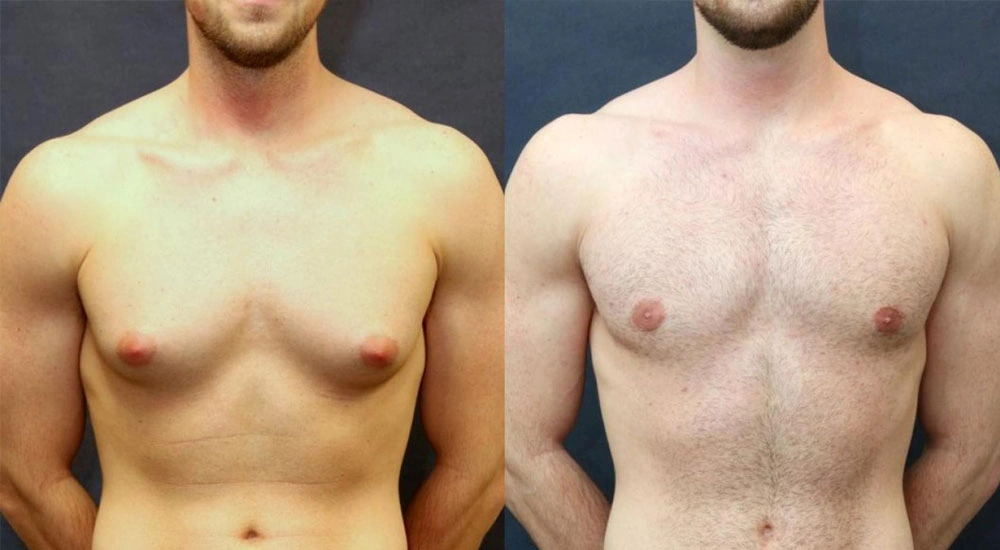
The gynecomastia surgery is performed when male breast enlargement (usually due to excess glandular tissue and, in many cases, fatty tissue as well) causes physical discomfort or, more often, significant psychological discomfort. The following is the most relevant information on the causes, surgical methods, procedure, risks and aftercare.


What is gynecomastia?

True gynecomastia
Increased glandular breast tissue due to hormonal imbalance.

Pseudogynecomastia (lipomastia)
Increased breast volume caused mainly by fat accumulation.

Important:
Prior to surgery, it is essential to determine what type of gynecomastia is present, as treatment varies depending on the diagnosis.

Surgical methods

Liposuction (fat removal)

  • Frequently used in pseudogynecomastia with fat accumulation.

  • Small incisions and minimal scarring

  • Vibration or ultrasound assisted liposuction is often recommended.

Glandular excision (subcutaneous mastectomy)

  • Necessary in true gynecomastia

  • Removal through an incision in the lower edge of the areola (periareolar).

  • Often combined with liposuction for improved contouring

Tightening of the skin (in cases of severe flaccidity)

  • Indicated in advanced gynecomastia or after significant weight loss.

  • May result in more visible scars (e.g., T-shaped or anchor-type incision).

Surgical procedure

  • Duration: approx. 1-2 hours

  • Anesthesia: usually general anesthesia; in minor cases, local anesthesia with sedation

  • Ambulatory or hospitalization: depends on the severity and the technique used; it is often performed on an outpatient basis.

Risks and possible complications

  • Bruising, swelling, pain

  • Infections and alterations in the healing process

  • Asymmetries (rare)

  • Scars

  • Nipple numbness (usually temporary)

  • Rare: bleeding or seroma formation (fluid accumulation)

Risks and possible complications

  • Bruising, swelling, pain

  • Infections and alterations in the healing process

  • Asymmetries (rare)

  • Scars

  • Nipple numbness (usually temporary)

  • Rare: bleeding or seroma formation (fluid accumulation)

Aftercare

  • Compression vest: use for 4-6 weeks to reduce swelling and stabilize the result

  • Rest: avoid physical exertion and sport for several weeks

  • Medical checkups: regular visits to monitor progress

  • Final result: visible after approximately 3-6 months

Gynecomastia may affect approximately 30-70 % men.

Specialized consultation

  • The plastic and cosmetic surgeons are the right specialists.
    A proper diagnosis (ultrasound and, if necessary, hormonal analysis) is essential to differentiate between true gynecomastia and pseudogynecomastia.